

Chloe Beddow
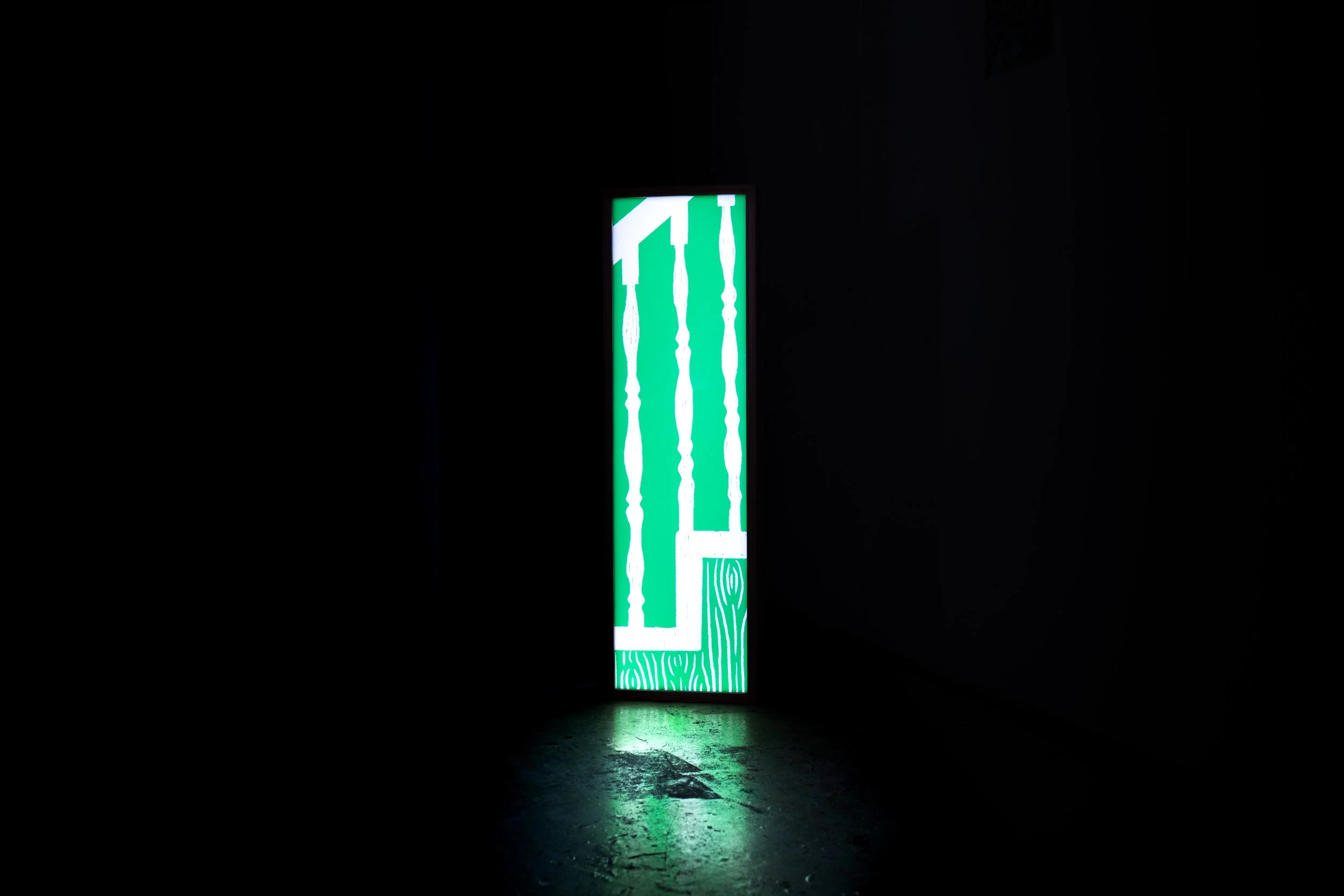
When disability knocks at your doorstep, it will settle across the stairwells, recesses and expanses of domestic space. Its occupancy can be abrupt or arranged across many scattered notices. Lugging a suitcase, disability pushes stifled latches to reveal an olio of essential aids and contraptions, incongruous to what may be readily known.
What disability looks like is never certain and on occasion, it is indistinguishable. It will join outings, get-togethers, and ceremonies. Disability will feel obliged to ask for permission when moving through the world, encountering congestion of the social, economic, and physical variety. Personal definitions of disability are diverse, refined through conversation and understanding.
For artist Chloe Beddow, becoming a carer for her mother would establish disability and accessibility as pioneers of social and creative inquiry. Through her mother’s POTS (Postural Orthostatic Tachycardia Syndrome) diagnosis, Chloe and her family would adopt carership, joining her mother as they traverse an uneven, shifting landscape.
Materialising notions of invisibility with an iron fist in a velvet glove, Chloe wields her creative practice as an invitation into the unseen realities and comprehensions of disability. A Slade MFA Fine Art 2024 graduate, she binds metal hardware and laser etchings to poplar plywood, hand-engraving and velutinous fabric.
The Poorly Project joined Chloe in her Brixton-based studio to discuss the influences of carership and disability within her practice, offering a stepping stone into spirited insight.
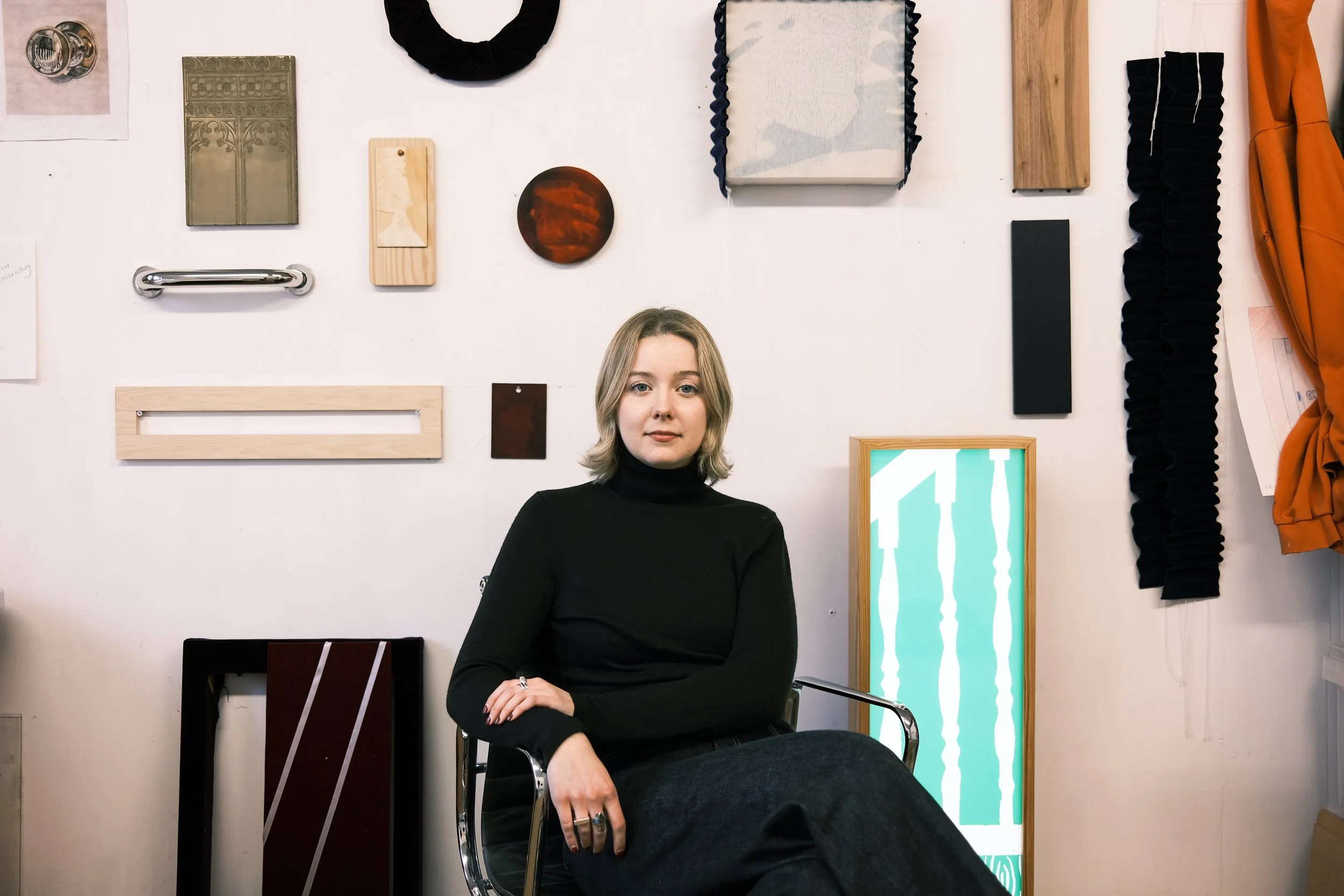
Up a flight of stairs and past a row of doorways, artist Chloe Beddow has hung, drilled and plugged her collection of works across her studio. Readying herself for a conversation centered on her practice, Chloe makes her intentions crystal-clear. The curation of works offers an entry point into her practice, but it is through its materiality, intimate anecdotes and aspirations for disability consciousness that we begin to see this intentionality etched deeply and vividly into her practice.
Tightly binding this intentionality, Chloe holds her mother’s POTS diagnosis and subsequent disability at the core of a creative practice that investigates spatial politics and architectural adaptability. It flashes both a literal and conceptual light to contemporary bodily experiences left commonly unseen.
“We have always lived in the same house and for the first 12 years of my life, my mum did not use a wheelchair. We could go into every local shop, restaurant and area. Overnight, the spaces that we felt so welcomed in before became completely different”
“It changed how we went out and lived our lives”
“I suddenly started to analyse space in a different way. So, is that material on the floor smooth? Is it bumpy? Is there a step into this restaurant? Is there a turning circle between the tables in the restaurant? Is there a disabled toilet? Can I get to the disabled toilet?”
For Chloe’s mother, the wheelchair and Blue Badge parking permit became the means to re-access society. Yet, they would swiftly reach the conclusion that many spaces and paths remain out of bounds for wheelchair users. The infrequency of accessibility-oriented entry points, design and years of carership would become natural informants to Chloe’s artistic might.
In her visions of care, Chloe’s role as carer offers nonverbal acuity to her mother’s needs, deepening their connection. Chloe admits that attending university and subsequent distance would allow her to reflect on the role of carership, the fulfilment it gave and the changes it brought to daily life.
Progressing from personal to institutional, Chloe’s creative pursuits at The UCL Slade School of Fine Art would offer an incline in her explorations into “the politics and poetics of space”. It was at this point that ‘Threshold’ (2024) came to be.
Supporting her peers in their degree show preparations in 2023, Chloe would discover the accessible side entrance to Slade. With the accessible entrance offering a less-than-idyllic greeting, Chloe would recognise that her mother and exhibition-goers using mobility aids would be required to use this route.
To ensure that mobility-aid users could share the same scenic entrance and exhibitory experience as all other visitors, the next ten months would be dedicated to researching, designing, constructing and officiating the functional art piece ‘Threshold’.
Understanding steps as boundaries to experience, blockades became apparent from the outset. There appeared to be no laws or legislation relevant to ramp safety. Many proposals for the construction and installation of a ramp were unmandated, aggravated by the sparsity of available information. Overcome with technical challenges and factoring in the protection of listed buildings, ‘Threshold’ exists as a stand-alone, portable ramp.
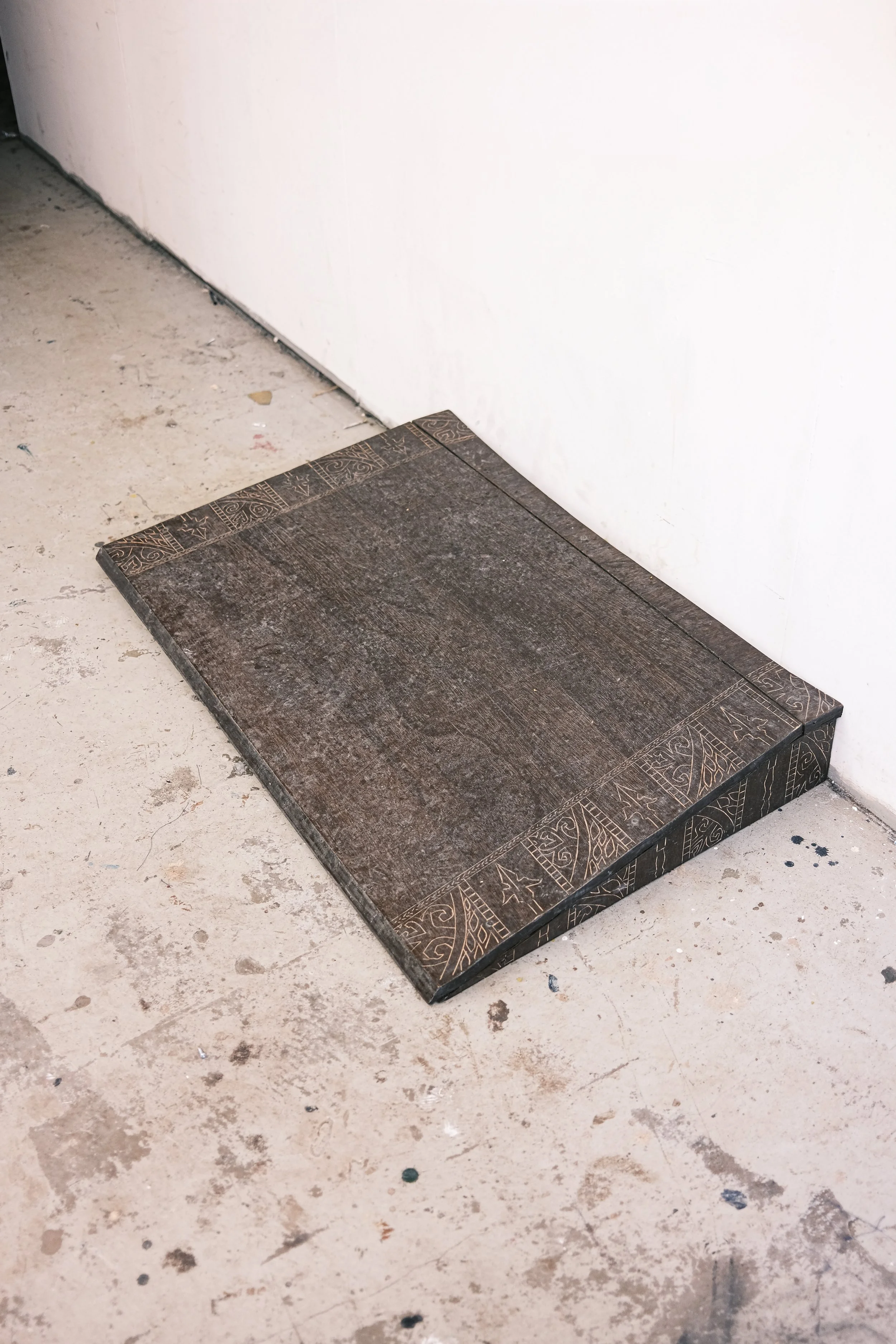
‘Threshold’ (2024)
“There are no laws about ramps. It's just guidelines”
“I downloaded this app on my phone to decipher what the incline of ramps were and for 10 months, would take a note of what incline all ramps I encountered were. And whenever I was with my mum and wheeling her up a ramp, I would take a note of what the incline was and how hard it was to push her up”
“I felt like I was creating the benchmark of what safety was,” continues Chloe.
“Through the process of making ‘Threshold’ I felt a lot of pressure to make it perfect. But as I worked on it, I realised that it doesn't have to be absolutely perfect to fulfil its crucial purpose: providing access. I also realised that we can't use the pursuit of a perfect solution as a deterrent from trying to provide that access in the first place”
“I also learned so much about making and construction. I was learning on the job, and that can be a scary process. But, importantly, it showed me how achievable it is to build things like ramps. That only reinforced the question I already had: why don't more spaces do it?”
Throughout her body of work, Chloe enlivens aesthetic considerations within accessible design, uniting refined functionality with considered ornamentation and strengthening the experiential value of her practice.
The greater the sensitivity to aesthetic considerations, the greater a mobility aid or assistive device can be recognised as a medium for self-expression and customisation, branching beyond pure functionality. This is preserved through ‘Caress’ (2026), exhibited in the duo-exhibition ‘Blind Spot’ with artist Leon Scott Engel at Pipeline Contemporary.
Padding purple velvet across a public accessibility handle, ‘Caress’ challenges material associations and how dissonant materials reflect public perceptions held towards disability. By reforging material definitions, ‘Caress’ reapproaches the metal accessibility handle as an object of transformative care. This transformative care is not solely determined by its function, but through the act of creating itself - burning, bending and welding to form the object of care. Its lush counterpart fastens itself across the metal body, indulging in self-expression emblematic of glamour and opulence.
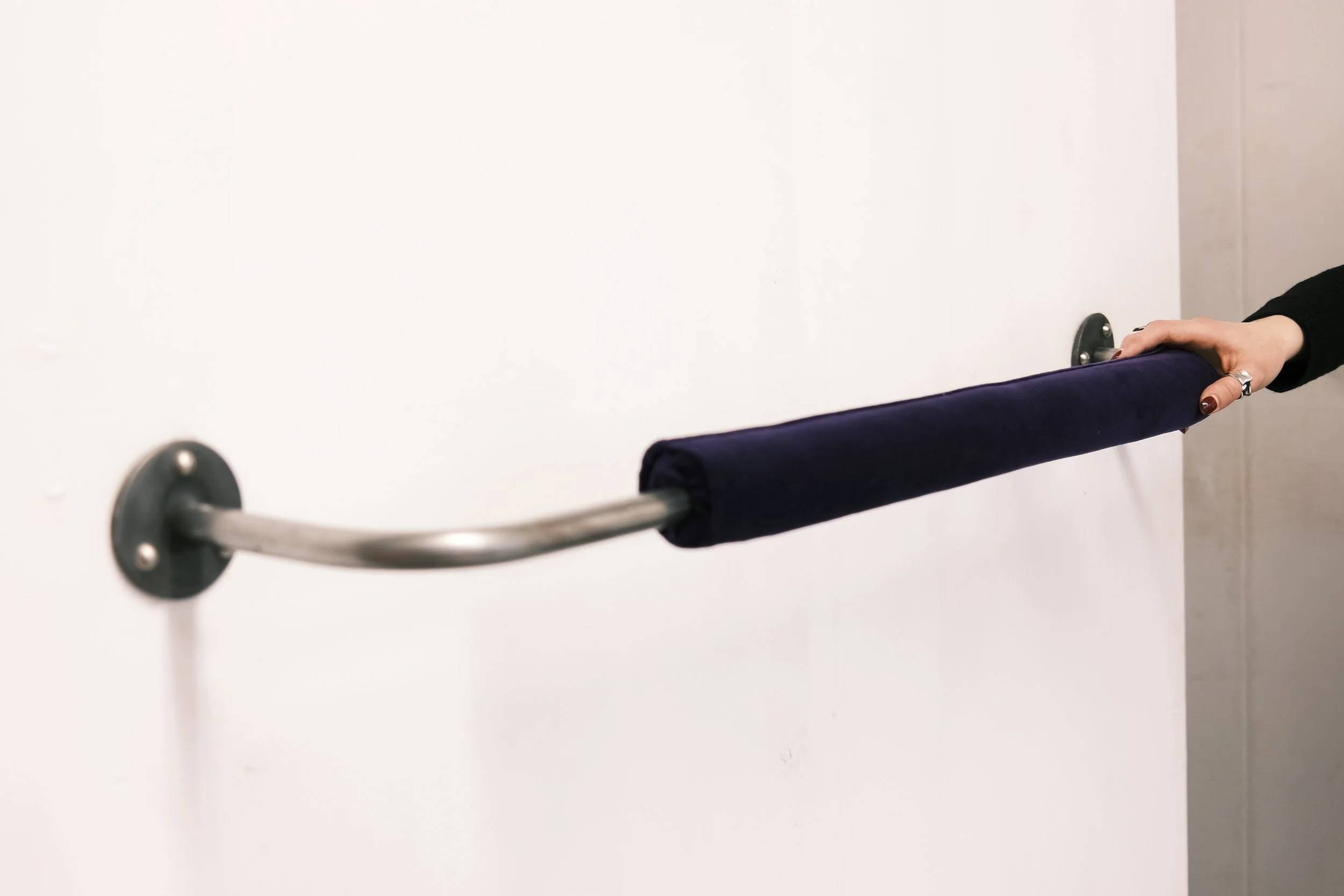
‘Caress’ (2026)
“I see my mum as a very glamorous person. But when she became a wheelchair user, I felt like society stripped her of her glamour. It was almost like she wasn't allowed to be glamorous anymore”
“And when I was making this handrail, I was making it almost with the personality of my mum in mind”
“To me, I want to give those moments of adornment, care and glamour to people with access needs. And I want them to feel beautiful and celebrated when they need to rely upon objects to help them”
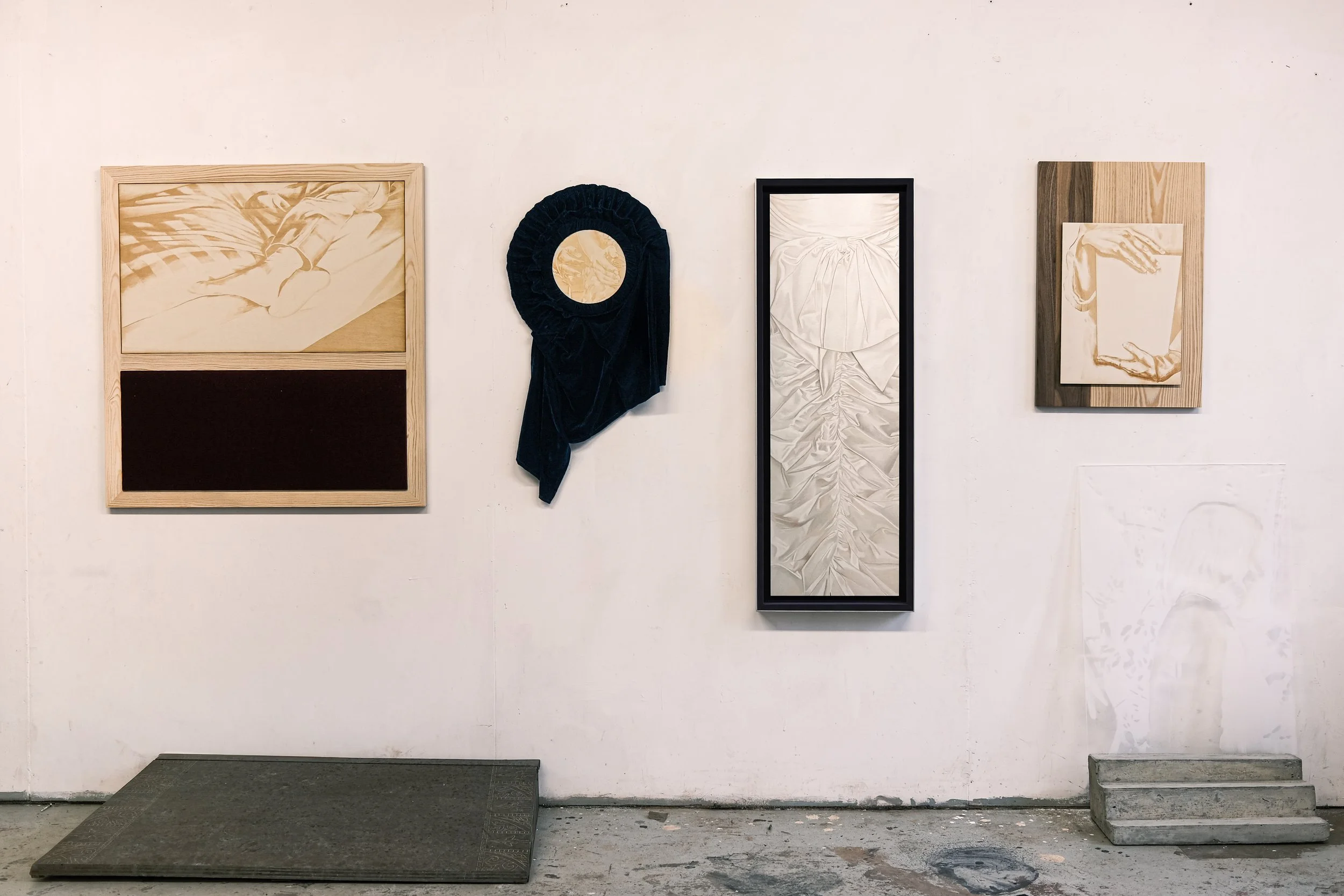
Triumphant in redefining material associations and crafting celebratory iconographies dedicated to the disabled body, ‘The Carer’ (2026) explores how disability can affect our intimate relationships. A digital painting laser-etched into wood and framed by velvet, ‘The Carer’ captures a moment of bodily proximity between a carer and wheelchair user - these figures being Chloe’s own parents.
Recollecting moments of photography with her family, Chloe noticed a quiet shift over time. With each time-distinct photograph, Chloe would find her father gradually kneeling so that he would share the same eye level as her mother. With his hand resting against her wheelchair, this action would mirror common affections and closeness towards a loved one.
Much like the unspoken language shared between carer and caree, this simple act of closing the physical distance reflected the instincts that develop through caring. It revealed a growing appreciation for the wheelchair - not as a separate being, but an extension of the person he loves. As Chloe describes, a carer is "someone who's just consciously there".
Inspired by vintage 1920’s rosettes awarded to first-place winners, Chloe champions this celebration of the disabled experience and the selfless carers within their lives, finding an eurythmy within this one-of-a-kind relationship and reminding us of the soundless refrain of care.
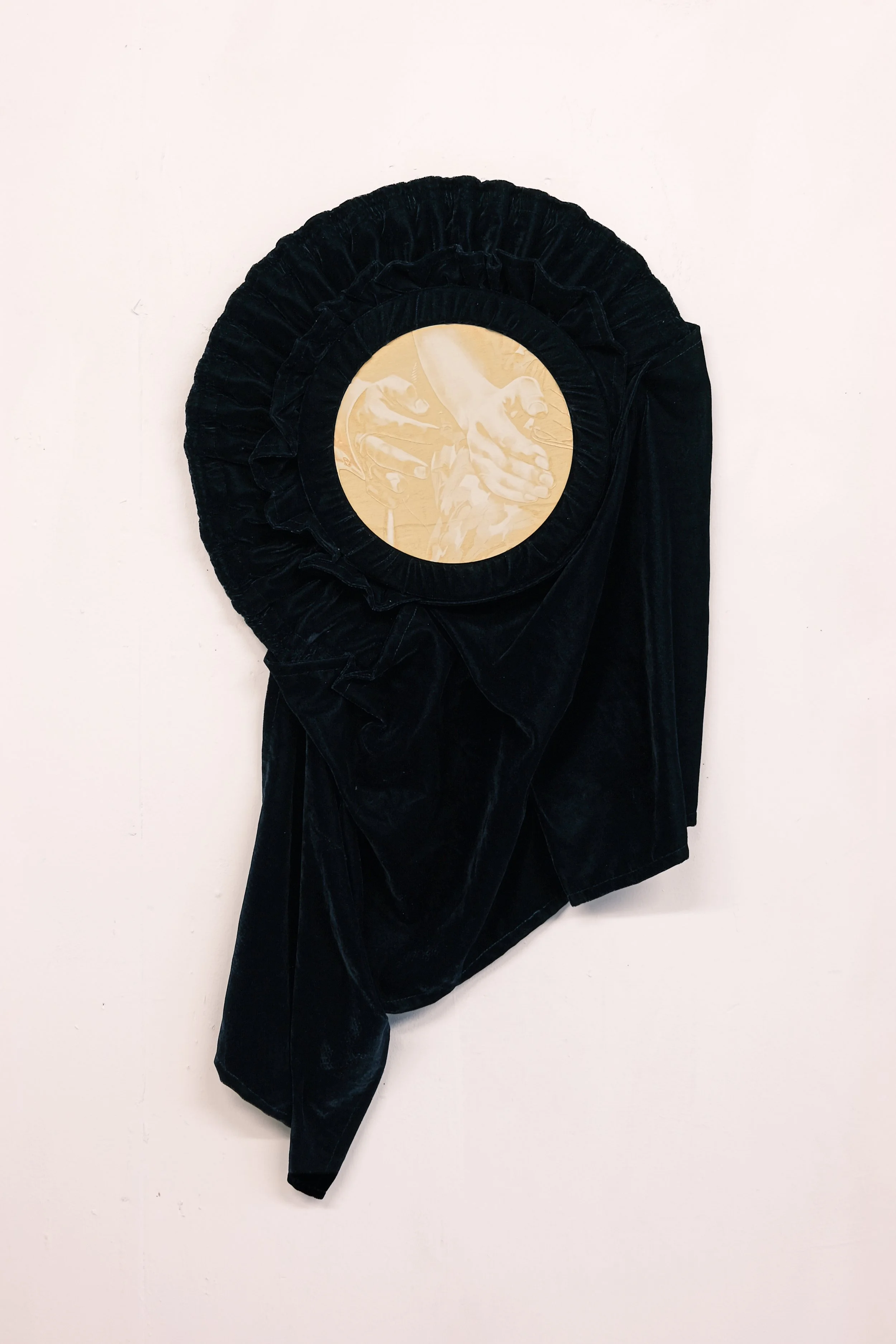
‘The Carer’ (2026)
“I absolutely loved how their hands weren't physically touching. But there's just something so reassuring and supportive of my dad's hand right there next to her”
“Being a carer is often a thankless and invisible role. We don’t carve out many spaces in society where we really give it a platform of celebration and gratitude”
“I decided to crop the image because I wanted it to have a universal appeal. I want you to look at that image and be able to relate to it, almost imprint you and someone else's hand or the person who's there to support you”
Whilst some kneel, those standing are left to lower their gaze to witness ‘Embedded’ (2024). Hidden within a corner of the studio, ‘Embedded’ is inconspicuous beyond its concrete steps. It is only through a committed act of reorienting oneself within a given space that we can begin to discern its merits. With the laser-etched acrylic surface leaning against the wall, light offers a helping hand and wheelchair users have a vantage view, witnessing an almost-there figure.
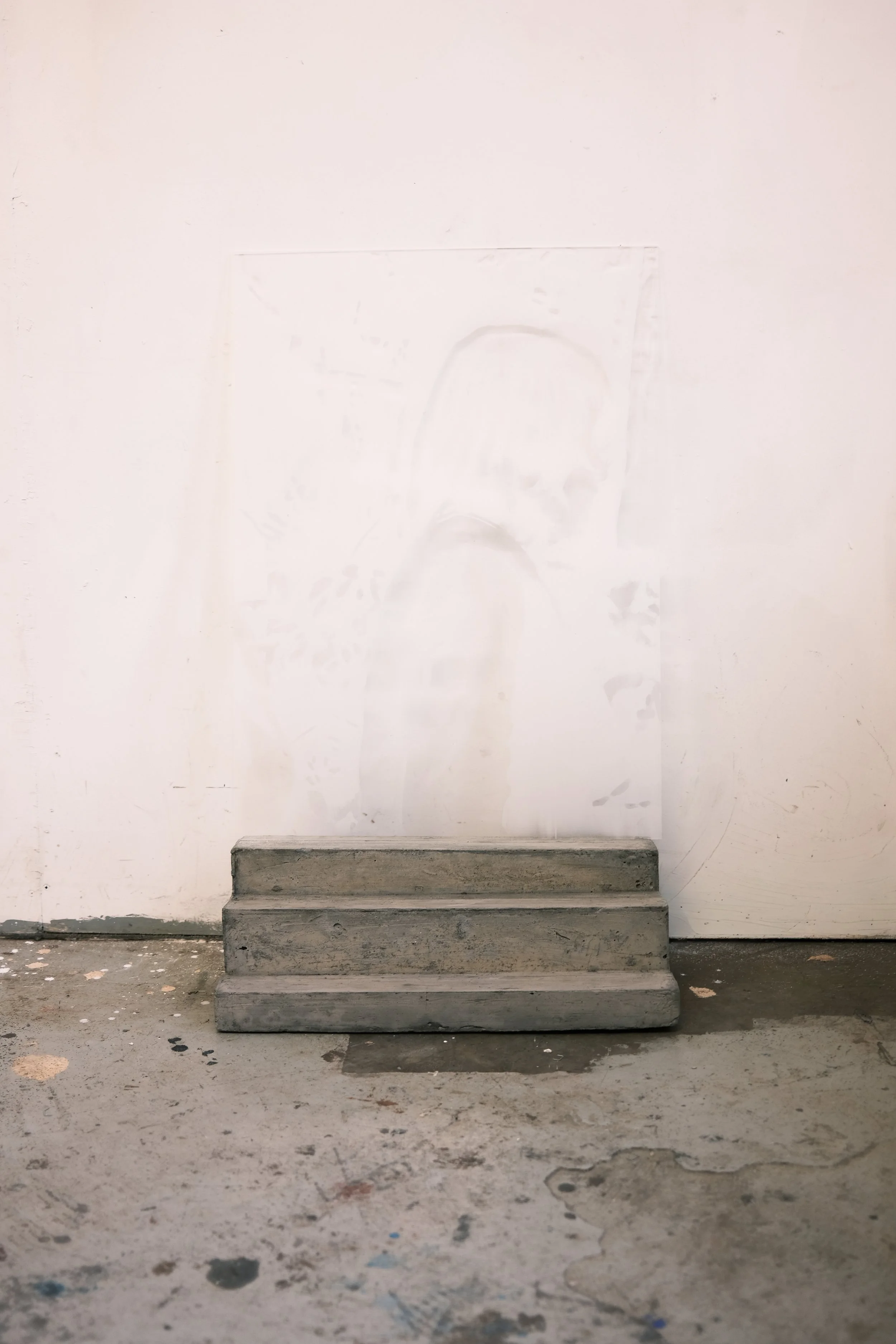
‘Embedded’ (2024)
Influenced by ‘The Invisible Women: Exposing Data Bias in a World Designed for Men’ by Caroline Criado-Perez, ‘Embedded’ interrogates the determining factors of disability consciousness and how the act of having a clearer view of the piece speaks to bettering conditions for experiences deemed invisible within our society. The cardinal inquiry for ‘Embedded’ is how we can retrain our sight and interactions with our surroundings to improve visibility on disability and identify missteps in accessibility.
“Good art hits you in the body and in the mind. If your body is uncomfortable and you feel physical discomfort whilst looking at a piece of art, it's going to interrupt that visual interpretation, analysis or your ability to be present in looking and feeling”
“I’m trying to embed this thinking into the design of my work—considering how different bodies experience it. If a piece is uncomfortable to view, for certain people, then no matter how strong its conceptual grounding, it will always be undermined by physical discomfort”
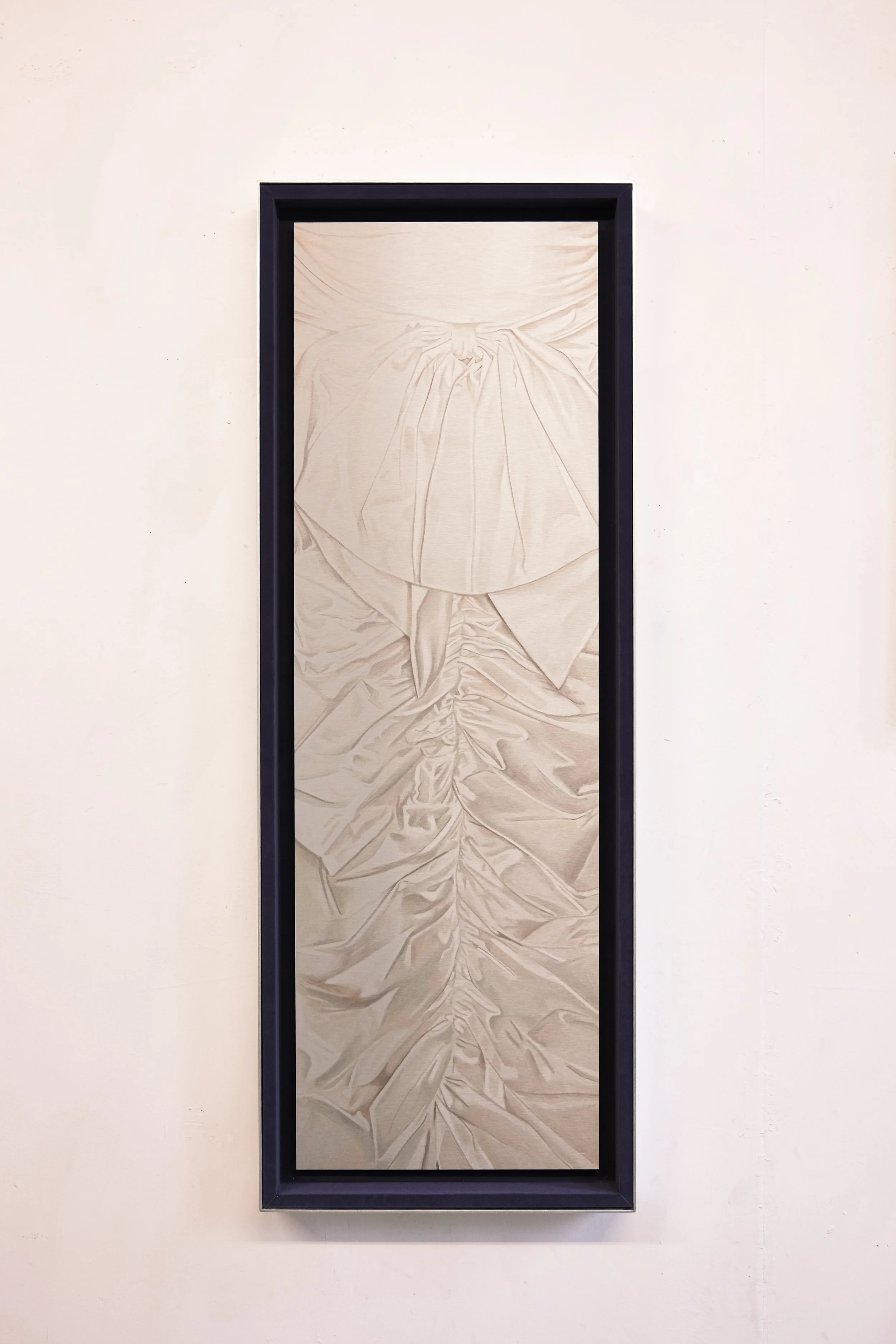
‘Shielded’ (2026)
“I'm interested in the different definitions, lines and boundaries of that word ‘invisibility’, and deepening people's curiosity with what they're looking at and challenging their perception of what they're seeing”
“For example, when someone's not in a physical space, you still have all of their scratch marks and the objects that they use. Their physical presence is recorded, but they're not physically present”
“And I think the purpose of these pieces is to really challenge the parameters of the invisible. If we don't give something our gaze, it can become invisible”
Chloe’s creative efforts to broaden disability consciousness and accessibility demands collective effort: slowing down, encouraging curiosity in participation and understanding who a space serves.
Whilst this imperative matter remains, moments of care are nestled between each fold and ripple of velvet. Chloe speaks fondly of her role as a carer, the relationship with her mother and how both these experiences remain at the beating heart of her creative practice:
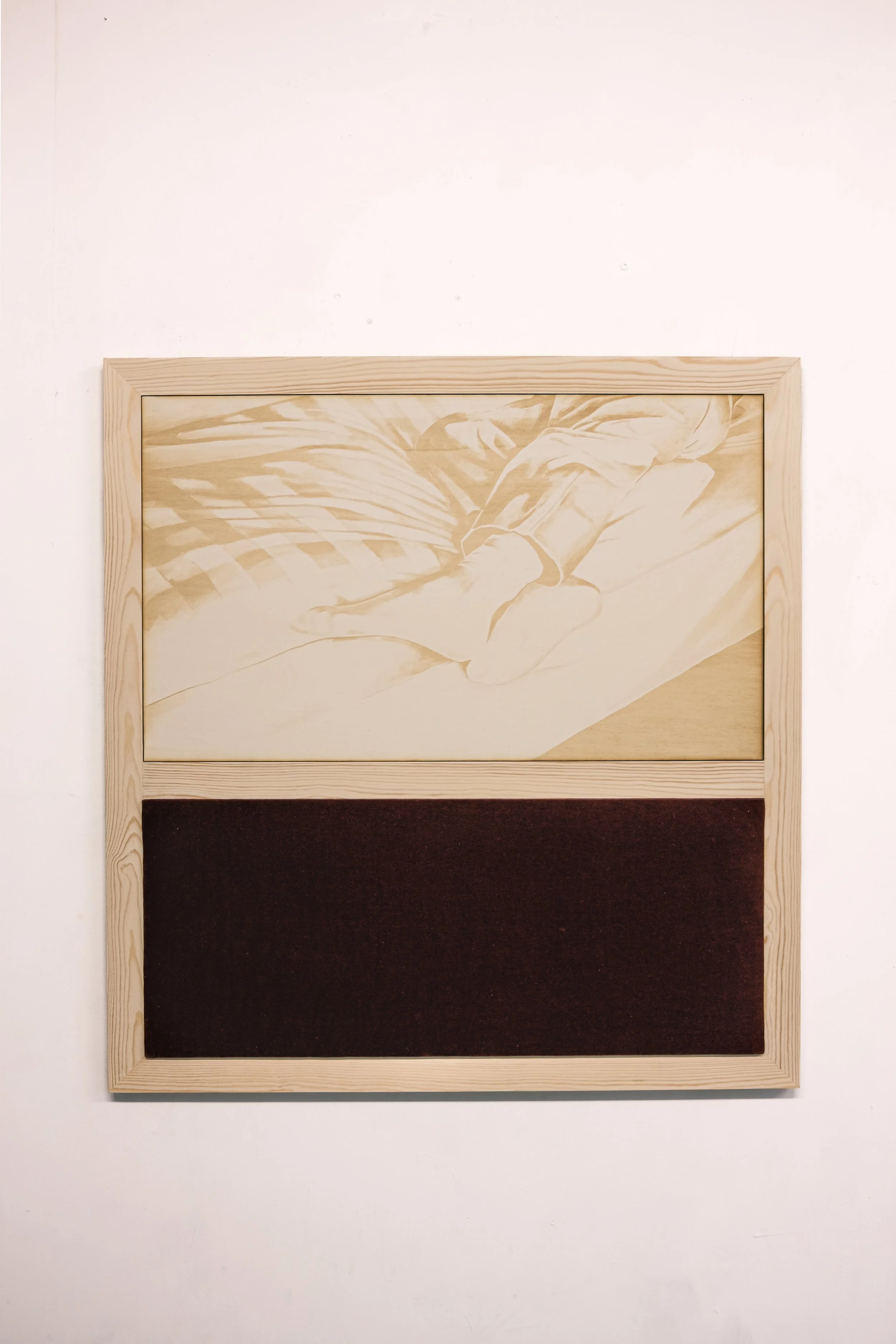
‘Slumber’ (2026)
“I speak positively about being a carer, because it made me look deeper and think deeper, which massively increased my visual enjoyment from other things”
“Accessibility doesn't exist in a vacuum; it's interconnected with everything we experience. Greater understanding in one area leads to greater understanding in others”
“I think with my mum, watching her use ‘Threshold’ to enter the front entrance of Slade was the most special moment I've had as an artist so far. You can feel quite helpless as a carer; there's only so much you can do. You can help them, you can try and support them, but you can't change everything like you want to. But ‘Threshold’ was an example where I could change something directly impactful and that was really powerful”
“It makes us all feel connected. And I hope that she feels proud of it. I hope that she feels really proud of herself, of the impact that she's had on me or just how celebratory I want her to feel about her position in society”
You can learn more about Chloe by visiting her Instagram and official website.
All Images Courtesy of The Poorly Project
